







When you're running an online business, your website structure isn't just about helping customers find what they need—it's about teaching search engines which content matters most. A well-designed ecommerce site structure acts as a roadmap that guides both search engine crawlers and shoppers to your best offerings and inventory, turning organic traffic into revenue.
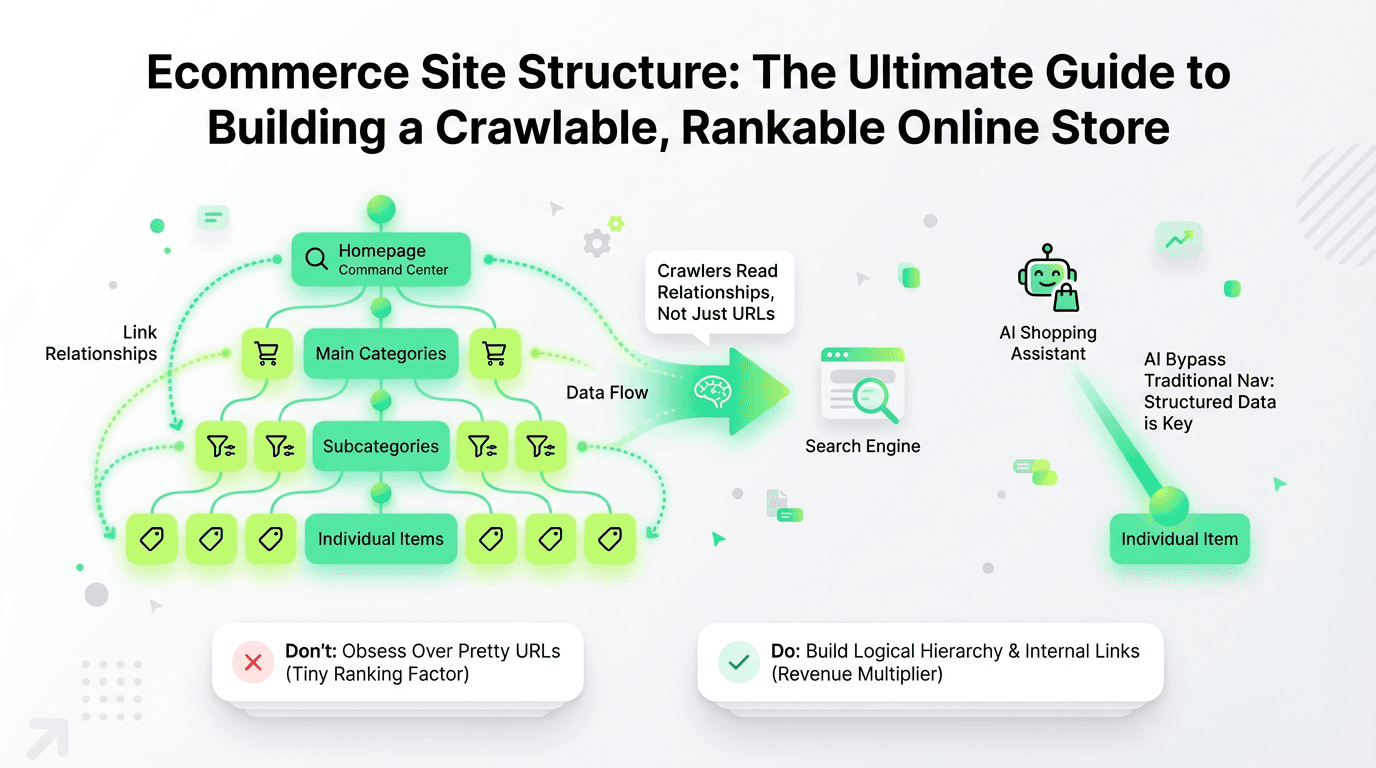
But here's the thing most store owners get wrong: they obsess over pretty URLs while search engines are actually reading the relationships between different pages. Your internal links, navigation structure, and breadcrumb trails tell crawlers far more about what's important than any URL pattern ever could.
In this guide, you'll learn how to do SEO for ecommerce website architecture—from mapping hierarchies to avoiding crawl traps, with a fresh look at how AI shopping assistants are completely reshaping the rules for modern online stores.
Why Ecommerce Site Structure Matters for SEO
Your website structure is the foundation of your entire optimization strategy. Think of it as the skeleton that holds everything together—without it, even the best content and backlinks won't deliver results.
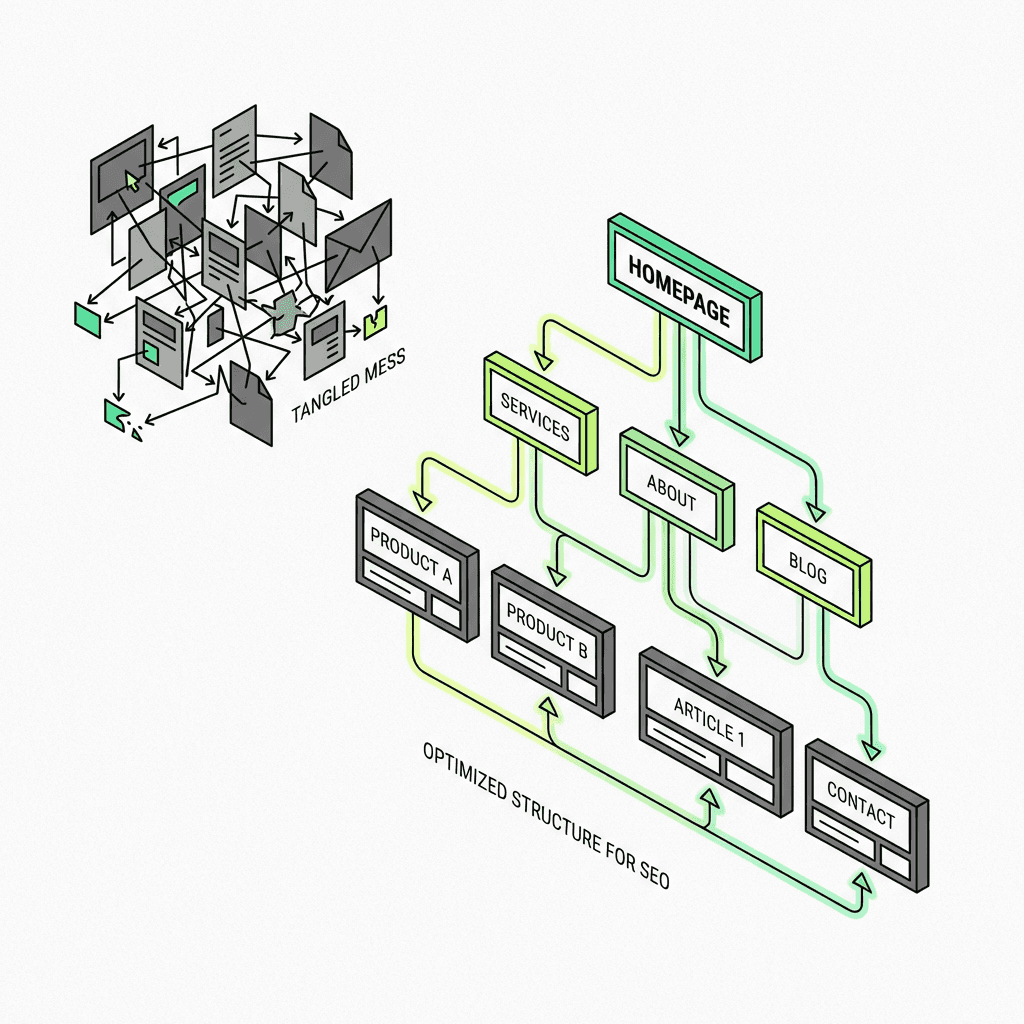
Search Engines Infer Importance from Link Relationships
Here's a critical insight: search engines don't just look at your ecommerce URL structure—they analyze how content links to each other. Pages that receive more internal links from important locations (like your home page) are perceived as more valuable. This concept, known as PageRank flow, means that your navigation architecture directly influences which content ranks.
For example, if your home page links directly to "Running Shoes" but buries "Trail Running Shoes" three clicks deep with minimal internal links, search engines interpret running shoes as more important—even if trail running shoes generate more revenue.
The Business Impact
According to industry research, ecommerce websites with optimized navigation see:
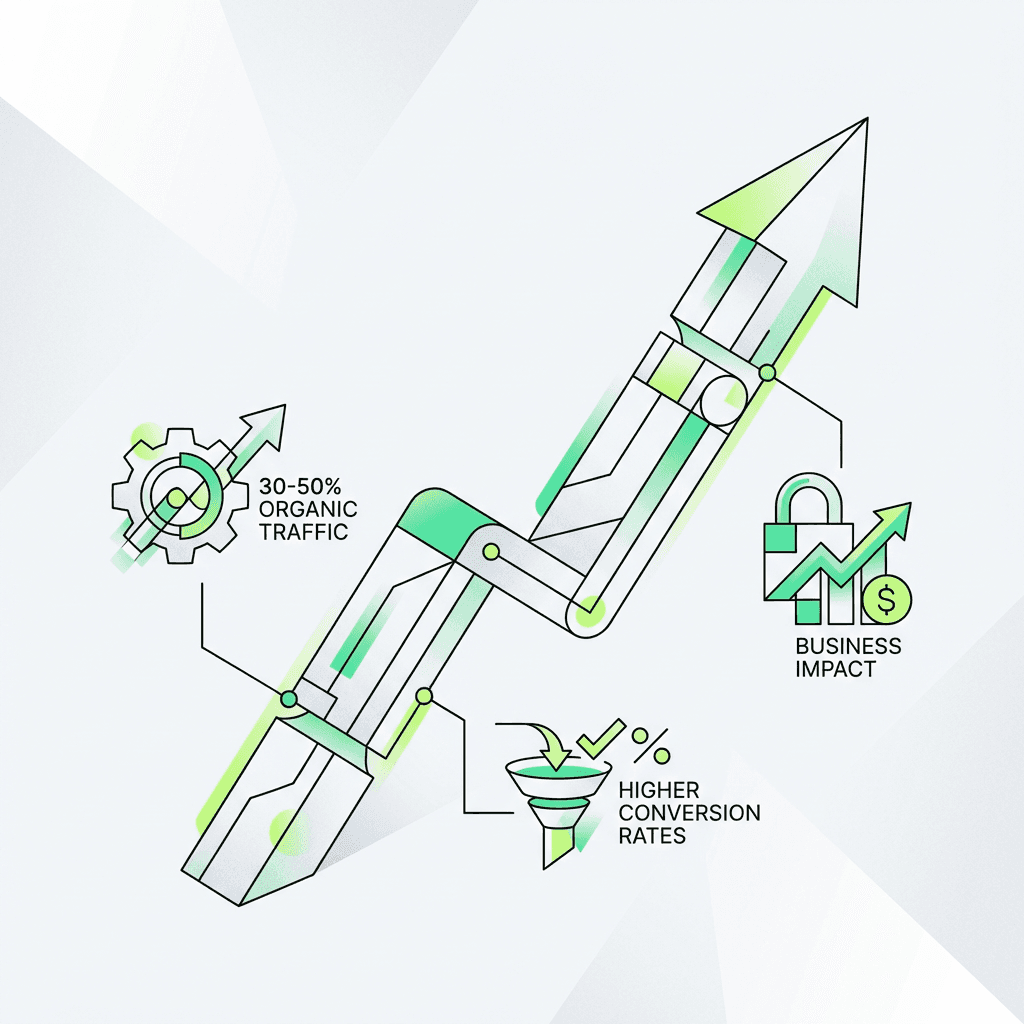
30-50% improvement in organic traffic to main sections
Better crawl efficiency (search engines discover new inventory faster)
Higher conversion rates as users find what they need more easily
Reduced duplicate content issues
A clean, logical structure isn't just an optimization win—it's a revenue multiplier. Leveraging ai productivity tools for marketing can further streamline ongoing optimization and ensure your architecture evolves alongside your business needs.
The Anatomy of a High-Performing Ecommerce Site Structure
Most successful online stores follow a pyramid-like hierarchy that makes sense to both humans and bots. Let's explore some of the best examples of this approach:
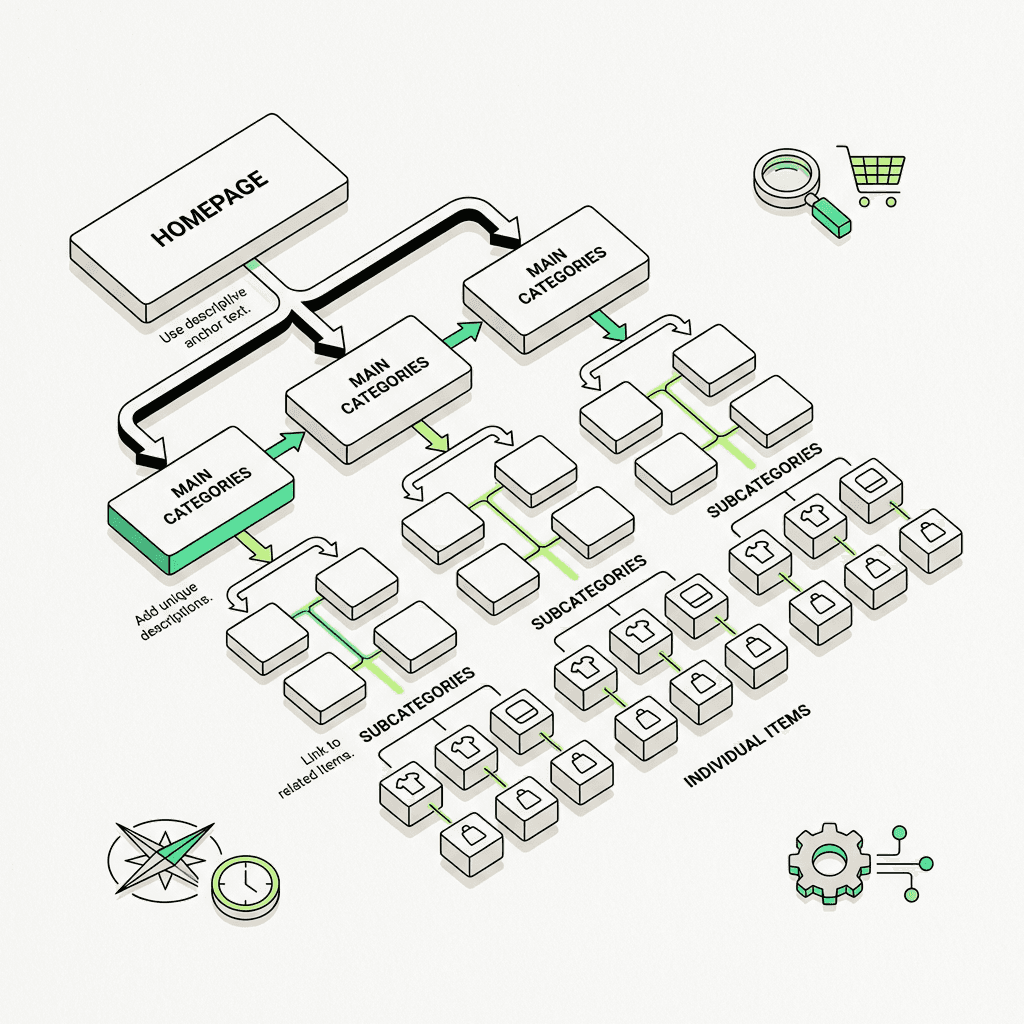
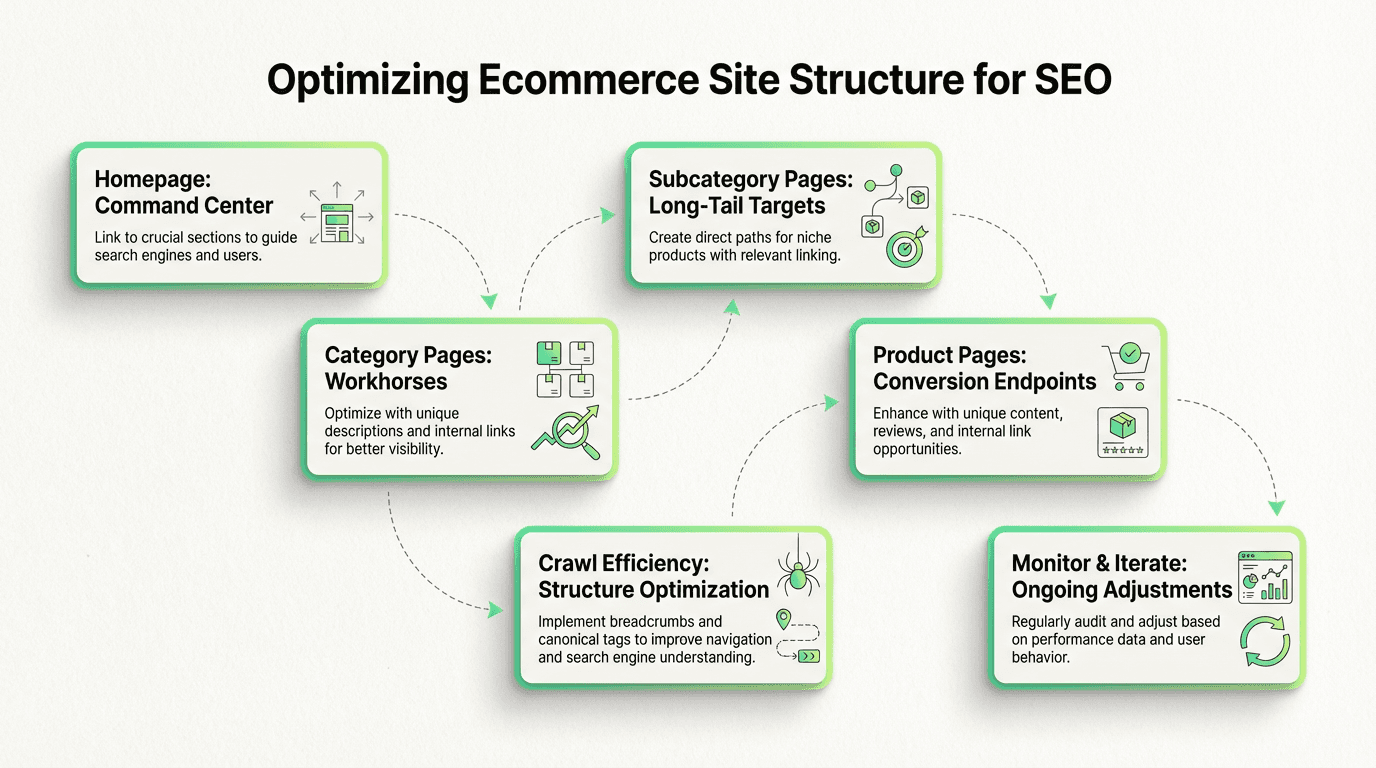
Homepage → Main Categories → Subcategories → Individual Items
Let's break down each level and how to optimize it.
1. Homepage: Your Command Center
Your home page should link to your most important sections. These links pass authority and signal to search engines which areas deserve the most attention.
Best practices:
Limit homepage links to 5-10 main sections
Use descriptive anchor text (e.g., "Men's Running Shoes" not "Click Here")
Feature best-selling or high-margin areas prominently
Ensure navigation is HTML-based, not JavaScript-dependent
2. Category Pages: The Workhorses
Category page optimization is where most online stores win or lose. These sections should target broad, high-volume keywords like "women's boots" or "wireless headphones."
Optimization checklist:
Create unique, keyword-rich descriptions (300+ words)
Include internal links to relevant subcategories
Add filters that enhance user experience without creating duplicate URLs
Use schema markup for listings
3. Subcategory Pages: Capturing Long-Tail Traffic
Subcategories help you target more specific search intent and create a simple path for customers. For instance, under "Headphones," you might have:
Over-ear headphones
Wireless earbuds
Noise-cancelling headphones
Gaming headsets
Each subcategory should link back to its parent and forward to individual items, creating a tight web of relevance signals. Using an ai workflow builder can help map and automate these connections for optimal outcomes.
4. Product Pages: The Conversion Endpoints
While these are your money-makers, they're often the weakest from an optimization perspective. Many stores use manufacturer descriptions (hello, duplicate content) or thin content that doesn't satisfy search intent.
Essential tips for success:
Unique descriptions with attributes (size, material, use cases)
Customer reviews (fresh, user-generated content)
Related items and upsells (internal linking)
Rich snippets (price, availability, ratings)
Designing Your Ecommerce URL Structure: What Actually Matters
Let's address the elephant in the room: ecommerce URL structure gets way too much attention. Yes, clean URLs are nice. But they're a tiny ranking factor compared to your link architecture and overall page structure design.
Official Guidelines
According to search engine documentation, URLs should be:
Descriptive and readable
Use hyphens to separate words (not underscores)
Keep parameters minimal
Match your audience's language
Good URL example:
Bad URL example:
The Real Priority: Logical Hierarchy
Your URL structure should reflect your hierarchy, but it doesn't create it. What matters more:
Breadcrumb navigation that shows the path (Home > Shoes > Running Shoes > Item)
Internal linking that connects related sections and items
XML sitemaps that help search engines discover all content efficiently
Think of URLs as labels on boxes in a warehouse. They help you find things, but the warehouse layout (your architecture) is what makes everything work. For larger catalogs, an ai marketing automation platform can help manage and optimize these structural elements at scale.
Product Category Hierarchy: Building Taxonomies That Rank
Creating a smart product hierarchy requires balancing optimization with user experience. Here's a step-by-step approach with structure examples:
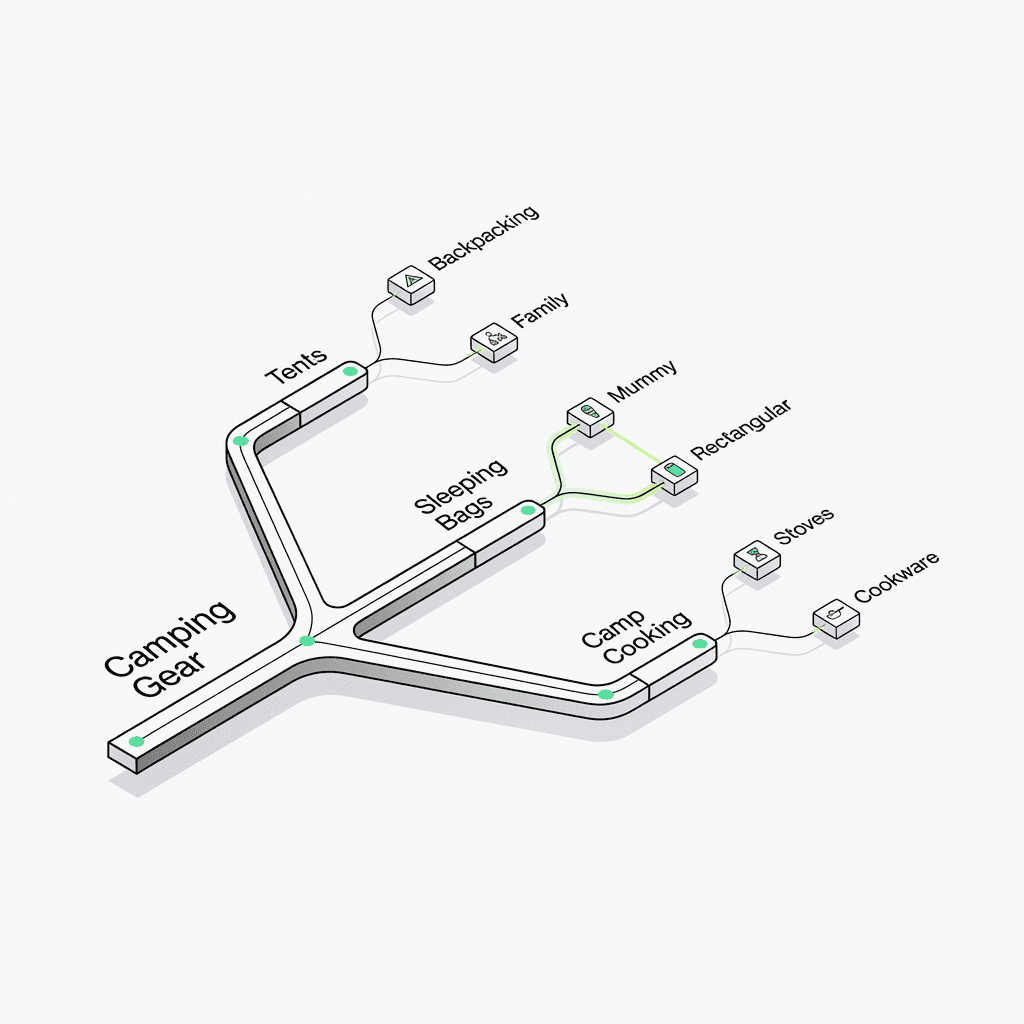
Step 1: Map Your Hierarchy
Start with keyword research to understand how people actually search for your offerings. Use tools like Ahrefs, SEMrush, or even Amazon's structure as inspiration—these are some of the best examples in the industry.
Example hierarchy for an outdoor gear store:
Each level should target progressively more specific keywords with lower search volume but higher purchase intent. This organized approach ensures visitors can navigate efficiently.
Step 2: Promote Your Best Sections
Not all sections are created equal. Identify which ones drive the most revenue or have the highest margins, then give them preferential treatment:
Link from the homepage
Feature in main navigation
Add to footer links
Cross-link from blog content
This strategic internal linking tells search engines, "This section matters," and concentrates your authority where it counts. Advanced ai agents for marketing can help automate and monitor these internal link strategies for ongoing improvements.
Step 3: Avoid Orphan Pages
An orphan page has no internal links pointing to it—making it nearly invisible to search engines. Run regular crawls using Screaming Frog or Sitebulb to identify orphans, then add them to relevant sections or related areas to ensure they work properly within your site architecture.
Breadcrumbs SEO: The Underrated Navigation Element
Breadcrumbs are one of the easiest wins for online stores. These simple navigational aids show users (and search engines) exactly where they are in your hierarchy.
Example breadcrumb:
Why Breadcrumbs Matter for Optimization
Structured data opportunity – Implement BreadcrumbList schema to get rich snippets in search results
Internal linking – Every breadcrumb is a contextual link to a parent section
User experience – Reduces bounce rate by making navigation simple and intuitive
Crawl efficiency – Helps search engines understand your site architecture faster
Implementation Tips
Use HTML lists (`
` or `
`) with schema markup
Make each breadcrumb clickable (except the current location)
Keep breadcrumbs consistent across all content
Place them near the top, below the header
Search engines often display breadcrumbs in results instead of the full URL, giving you more control over how your content appears in SERPs. An ai marketing workspace can help ensure breadcrumb consistency and monitor their performance across your entire catalog.
Avoiding Ecommerce Crawl Traps
Even well-intentioned website structures can create crawl traps—infinite or near-infinite URL spaces that waste crawl budget and dilute your ranking power.
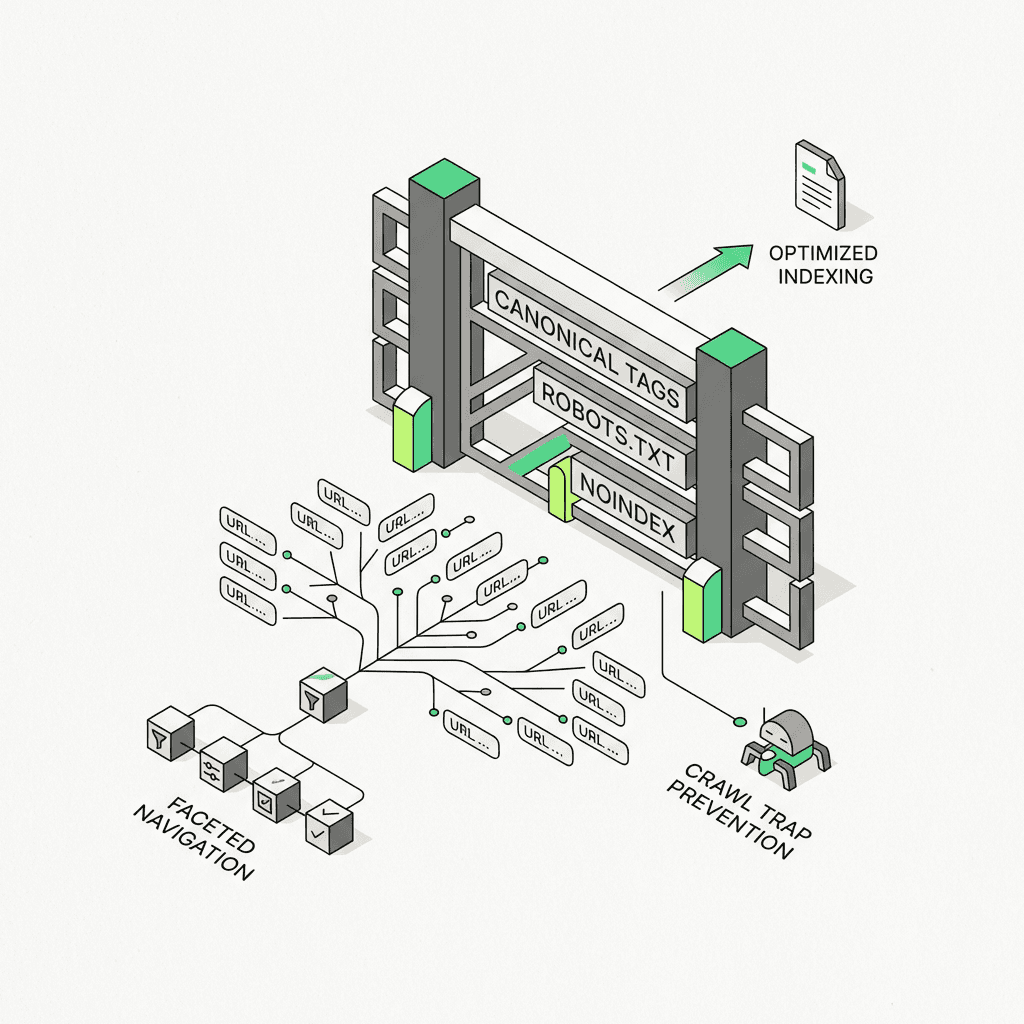
The Faceted Navigation Problem
Faceted navigation (filters for color, size, price, brand, etc.) is essential for user experience but dangerous for optimization. Each filter combination can create a new URL:
With just 5 filters and 5 options each, you could generate 3,125 URLs—most with duplicate or thin content. Understanding the different types of navigation traps will help you avoid common pitfalls.
Solutions for Faceted Navigation
Canonicalization – Point all filtered URLs back to the main section
2. Robots.txt – Block parameter-based URLs from being crawled
3. Noindex, Follow – Allow crawlers to follow links but not index filtered content
4. Parameter Handling in Search Console – Tell search engines which parameters don't change content
The best approach depends on whether your filtered sections have unique, valuable content. If "Red Nike Shoes" gets significant search volume, you might want to index it with unique content. Otherwise, canonicalize. Using ai workflow automation for growth can help identify and resolve potential crawl traps before they impact your rankings.
How AI is Changing Ecommerce Site Structure
Here's where things get interesting—and a bit scary if you're stuck in 2015 thinking. The way customers interact with online stores is evolving rapidly.
AI Shopping Assistants Bypass Traditional Navigation
Modern AI-powered shopping tools don't browse your sections the traditional way. Instead, they respond to natural language queries like:
"Find me running shoes under $100 with good arch support and a wide toe box"
These assistants parse attributes directly from your listings, completely skipping your carefully crafted hierarchy. This means:
Individual listings need rich, structured data – Not just for search engines, but for AI systems
Attribute-level content matters more – Size charts, material specs, use cases
Traditional optimization isn't dead – But it's sharing the stage with entity-based approaches
The New Priority: Structured Data
To rank in AI-driven shopping experiences, your listings must include:
Detailed specifications in structured formats (JSON-LD schema)
Natural language descriptions that answer common questions
Comparison data (vs. competitor offerings)
Attribute filters that AI can parse (not just visual filters)
This doesn't mean you should abandon traditional sections—they still drive massive traffic. But the balance is shifting toward item-level optimization. Utilizing ai powered marketing tools can streamline the process of adding and updating structured data consistently across your catalog.
Using AI Tools to Optimize Your Structure
This is where AI for optimization gets practical. Instead of manually auditing thousands of locations, AI-powered tools can:
Analyze which sections get traffic vs. which don't
Identify structural issues (orphan content, broken links, deep locations)
Compare your taxonomy against competitor strategies
Predict the impact of restructuring before you commit
The Metaflow Advantage for Ecommerce
Traditional audits are snapshots—they tell you what's wrong today but can't predict what happens if you restructure. This is where Metaflow AI changes the game for your online business.
As a natural language agent builder designed for growth marketing, Metaflow lets you build custom ai agents that:
Analyze taxonomy against search query patterns – See which sections align with actual search behavior
Identify underperforming structures – Find areas that get links but no traffic (or vice versa)
Test restructuring scenarios – Model the impact of moving items between sections or consolidating thin areas
Monitor competitor changes – Track when competitors restructure and measure the traffic impact
Unlike rigid platforms that force you into predefined workflows, Metaflow operates in natural language. You can say, "Show me all sections with fewer than 5 internal links and less than 100 monthly visits," and the agent executes it—no SQL, no spreadsheet gymnastics.
For growth teams managing large catalogs, this means you can experiment with structural changes, validate hypotheses with data, and deploy optimizations faster than ever. It's the difference between guessing and knowing. Incorporating a no-code ai workflow builder empowers marketers to adapt their website architecture without extensive technical resources.
Practical Steps to Audit and Improve Your Ecommerce Site Structure
Ready to optimize? Here's your action plan with practical tips to ensure success:
Step 1: Crawl Your Entire Website
Use Screaming Frog, Sitebulb, or similar tools to create a complete map of your online store. Look for:
Orphan content (no internal links)
Deep locations (more than 3-4 clicks from home)
Broken links and redirects
Thin content sections
Step 2: Analyze Your Information Architecture
Review your current hierarchy and ask:
Does this make sense to customers and visitors?
Are high-value sections easy to reach?
Do you have too many levels (creating a flat structure is often better)?
Are there common navigation patterns you're missing?
Step 3: Map Keywords to Sections
Create a spreadsheet matching your main sections to target keywords. Ensure each level has:
A clear keyword target
Unique content that addresses search intent
Internal links from related areas
Proper breadcrumb implementation
Step 4: Implement Structure Best Practices
Apply these structure SEO tips across your website:
Add schema markup (Organization, BreadcrumbList, Product)
Create XML sitemaps for different content types
Optimize your robots.txt to prevent crawl waste
Implement proper canonical tags
Ensure mobile navigation works well
Step 5: Monitor and Iterate
Use Search Console and analytics to track:
Which sections gain or lose traffic
Crawl stats and coverage issues
User behavior (bounce rate, time on page)
Conversion rates by section
Set up regular audits (quarterly is a good cadence) to ensure your architecture stays organized and effective as your business grows.
Common Ecommerce Site Structure Mistakes to Avoid
Even experienced web designers and marketers make these structural errors:
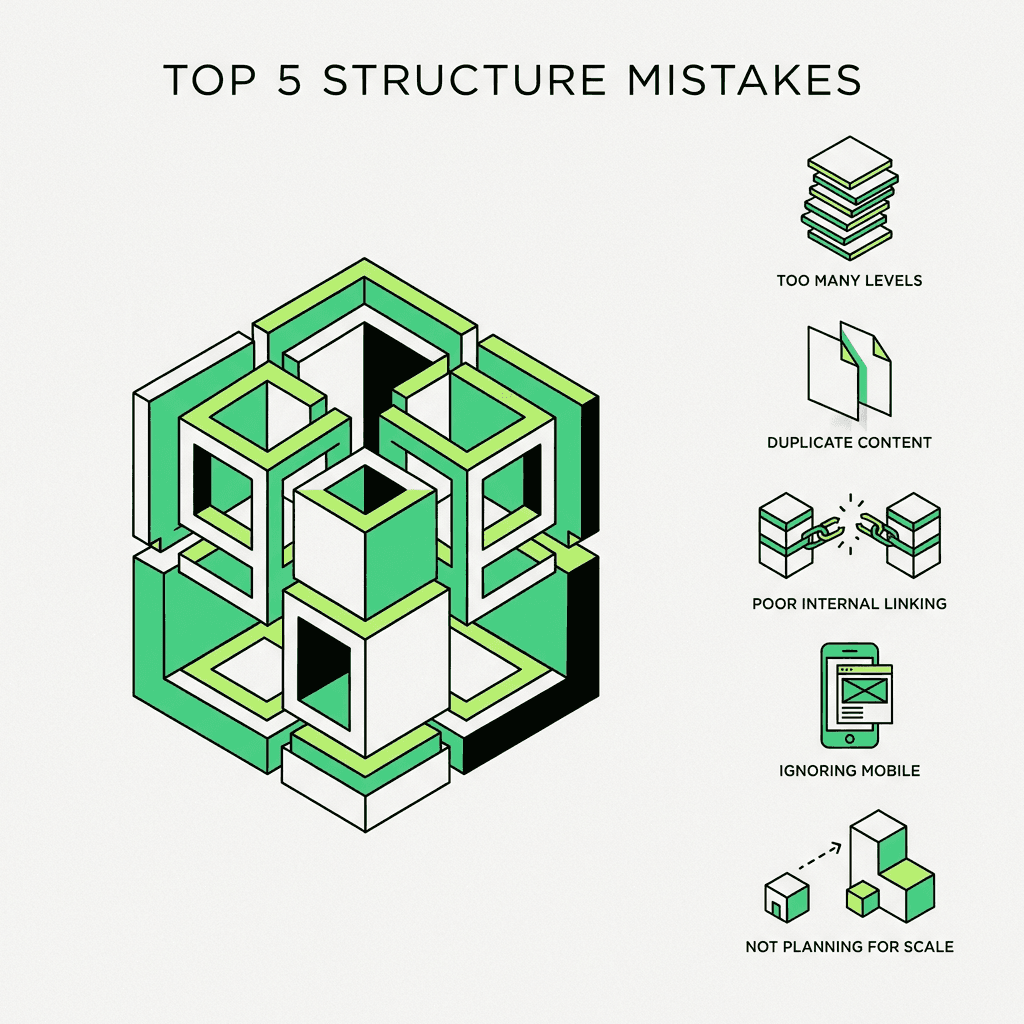
1. Too Many Levels
Going more than 3-4 clicks deep makes content hard to find for both users and search engines. A flat, simple structure often performs better than a deep hierarchy.
2. Duplicate Content Across Sections
When the same item appears in multiple sections without proper canonicalization, it confuses search engines and dilutes authority.
3. Poor Internal Linking
Many stores link only through navigation, missing opportunities to cross-link related items and sections contextually within content.
4. Ignoring Mobile Navigation Design
With most online shopping happening on mobile, a navigation structure that works well on desktop but fails on mobile will hurt both user experience and rankings.
5. Not Planning for Scale
Your structure should accommodate growth. If you need to add new sections or types of offerings, will your current architecture support it without major restructuring?
Real-World Ecommerce Structure Examples
Let's look at how top online stores organize their content:
Shopify Stores: Simple and Effective
Many successful Shopify stores use a flat structure with minimal levels:
Home → Collections → Items
Prominent search and filters to help customers find what they need
Clear navigation with 5-8 main sections
Large Marketplaces: Deep but Organized
Sites like Amazon use deeper hierarchies but maintain clarity:
Home → Department → Category → Subcategory → Item
Multiple navigation paths (top nav, sidebar, filters)
Extensive internal linking and "customers also viewed" sections
Niche Stores: Authority Through Content
Specialized online stores often integrate blog content and guides:
Home → Shop / Blog / Resources
Educational content that links to relevant offerings
Building topical authority through well-organized information
The best structure for your business depends on your catalog size, target audience, and resources. Start simple and add complexity only when it helps users and search engines find what they need.
Conclusion: Building a Structure That Scales
A well-designed ecommerce website structure is the foundation of sustainable online growth. By focusing on logical hierarchy, strategic internal linking, and user experience, you create a framework that helps both customers and search engines navigate your store efficiently.
Remember these key principles:
Structure design matters more than URL patterns – Focus on how content connects, not just how URLs look
Balance depth with accessibility – Keep important offerings close to your home page
Think beyond traditional navigation – Optimize for AI assistants and voice search
Monitor and adapt – Your structure should evolve as your business and the web change
Whether you're launching a new online store or optimizing an existing one, investing time in your site architecture will pay dividends for years to come. Start with the basics, measure your results, and continuously improve based on real data and user behavior.
Need help building an optimization strategy that actually works? Explore how Metaflow's AI agents can help you analyze, test, and optimize your website structure at scale—turning structural improvements into measurable business growth.