





TL;DR:
Meta descriptions are 120-155 character HTML summaries that appear in search results and significantly impact click-through rates, though they don't directly affect rankings.
Google rewrites meta descriptions ~63% of the time when it believes page content better matches the query—you can't guarantee your description will be used, but matching search intent and writing unique, accurate descriptions dramatically increases the odds.
Optimize for both traditional and AI search: Include target keywords naturally in the first 100 characters, write in answer-focused format for AI citation, and front-load specific value propositions (numbers, stats, benefits) to drive clicks.
Every page needs a unique description—duplicate or templated descriptions get rewritten and waste your chance to control messaging; for scale, use AI automation to generate unique, intent-aligned descriptions automatically.
Structure matters: Lead with value (not fluff), include your primary keyword early, address user intent explicitly, add concrete details, and end with a call-to-action.
Coordinate your title tag with your meta description to create a cohesive SERP presentation that maximizes clicks and clearly communicates your page's value.
AI-powered workflows can analyze page content, map search intent, generate unique descriptions at template scale, and validate against best practices—automating what used to take hours while maintaining quality and brand voice.
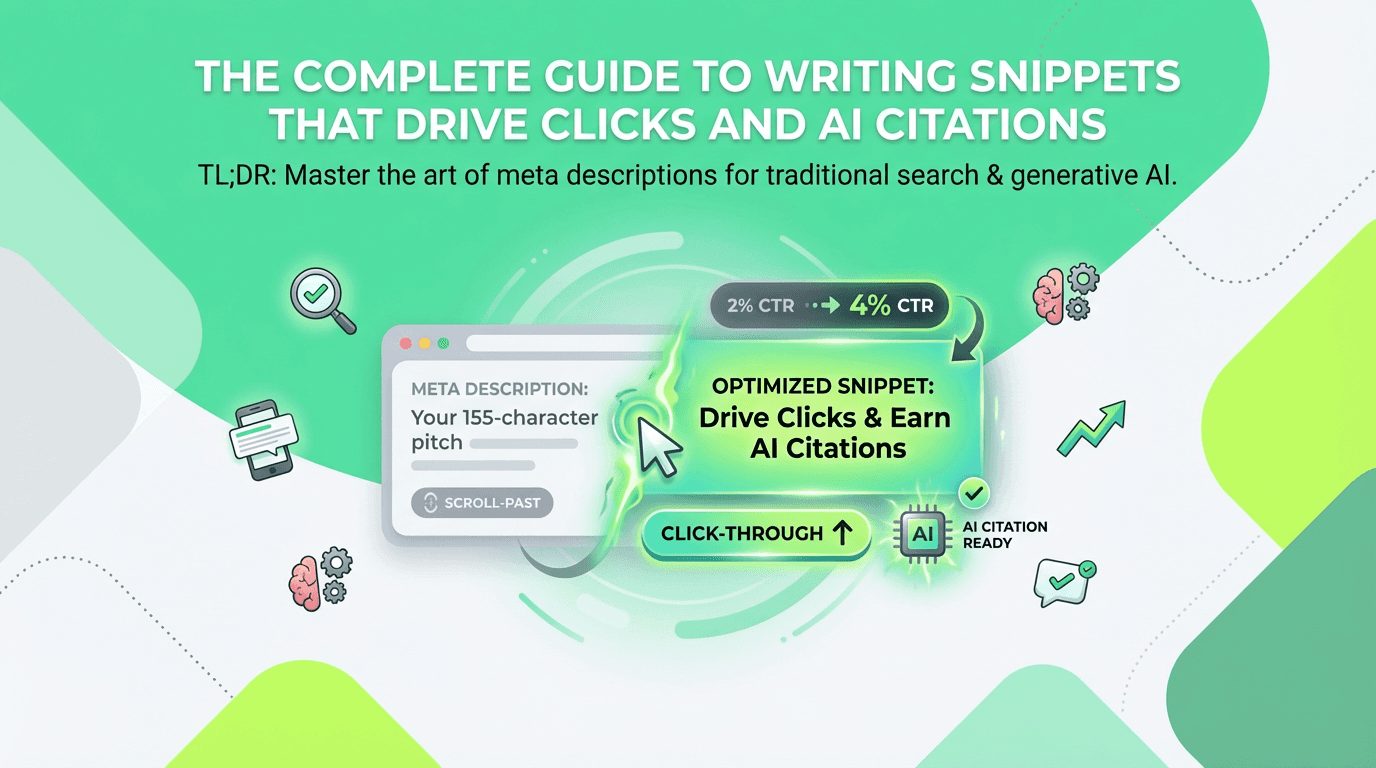
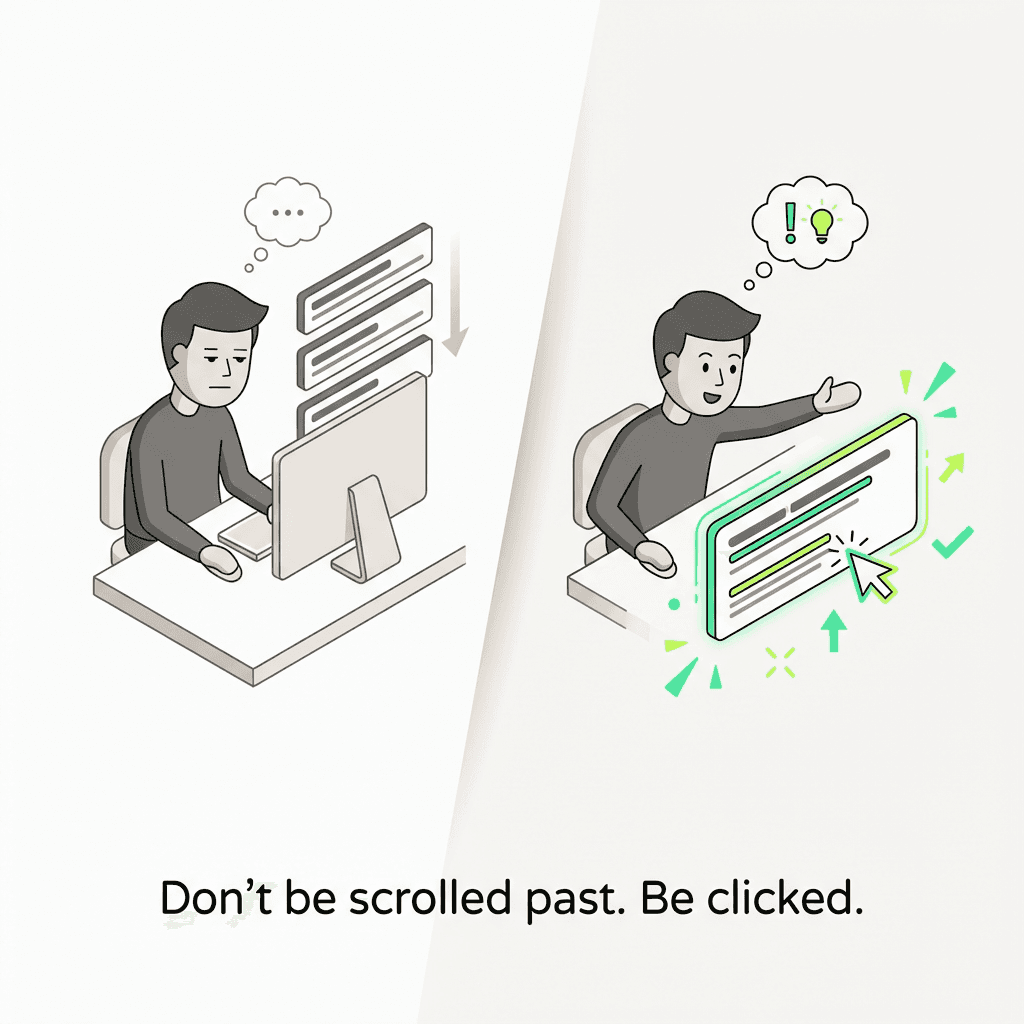
When someone searches for your content on Google, your meta description is often the first impression you make. It's the 155-character pitch that appears below your page title in search results—and it can be the difference between a click and a scroll-past.
But here's what most SEO guides won't tell you upfront: your meta description is a suggestion, not a guarantee. Google dynamically rewrites snippets roughly 63% of the time, pulling content directly from your page when it believes it better matches user intent. This means crafting effective meta descriptions requires understanding both what you control and what you don't.
In this guide, we'll walk through everything you need to know about meta descriptions in SEO—from technical implementation and character limits to why Google rewrites snippets and how AI search engines are changing the game. Whether you're optimizing a handful of pages or scaling descriptions across thousands of templates, you'll learn how to write unique, intent-aligned descriptions that maximize click-through rates in traditional search and increase your chances of citation in AI-generated answers.
What Is the Meta Description?
A meta description is an HTML meta tag that provides a concise summary of a web page's content. It lives in the `` section of your HTML and looks like this:
While meta descriptions don't directly influence your search rankings (Google confirmed this back in 2009), they play a critical indirect role. A compelling meta description improves your click-through rate (CTR), which signals to search engines that your result is relevant and valuable—potentially boosting your position over time.
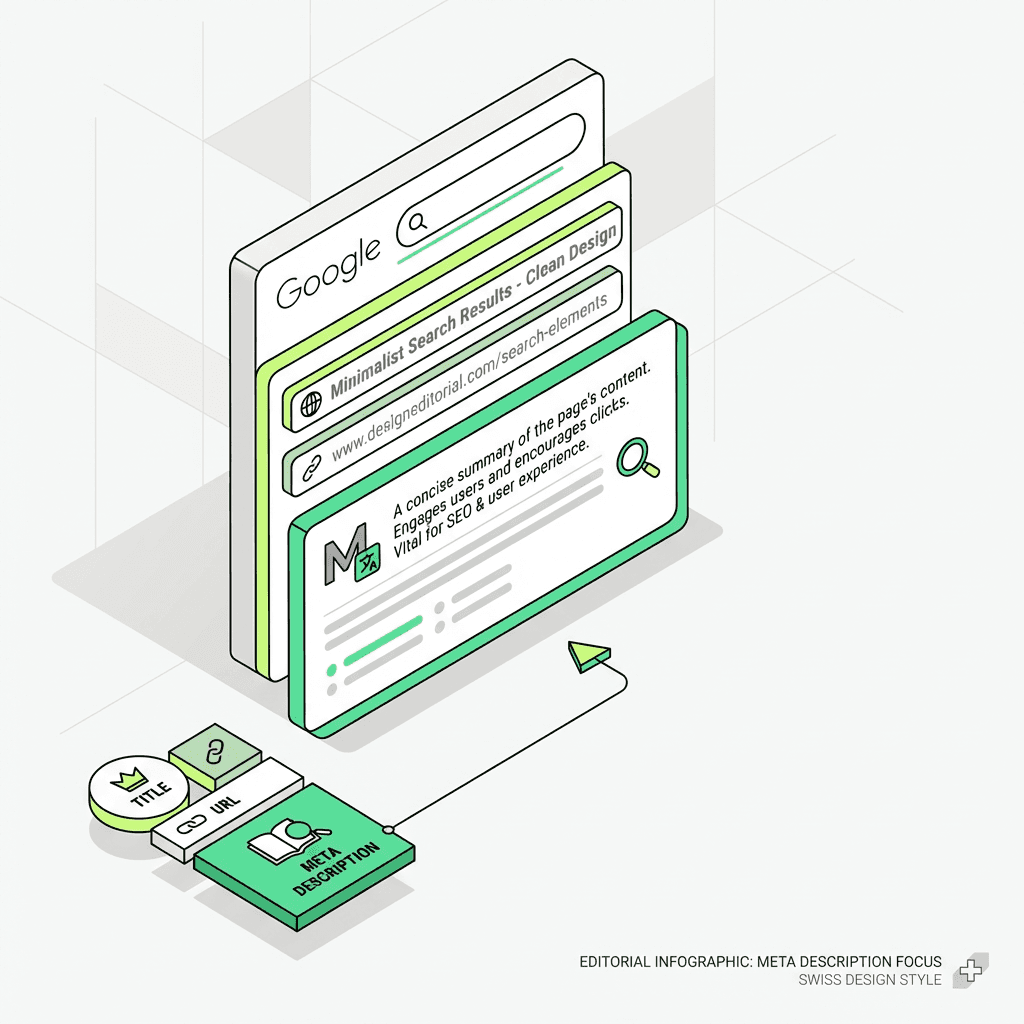
Think of your meta description as ad copy for organic search. It's your opportunity to persuade searchers that your page contains exactly what they're looking for.
The Role of Meta Description in SEO
Meta descriptions serve several key functions in your SEO strategy:
Click-Through Rate Optimization: A well-crafted description that matches search intent can significantly increase CTR. Studies show that improving CTR from 2% to 4% can drive meaningful traffic gains without ranking changes.
User Experience Signal: When users click your result and engage with your content (rather than bouncing back to search), it reinforces that your page satisfies their query.
Brand Messaging: Your description communicates your brand voice and value proposition in search results, differentiating you from competitors targeting the same keywords.
AI Search Optimization: Large language models and AI search engines increasingly use meta descriptions alongside page content when generating summaries, answers, and citations. A concise, answer-focused description improves your chances of being cited in AI-generated responses.
Meta Description Length: How Long Should It Be?
The optimal meta description length has evolved as Google has adjusted how much text it displays in search results and SERP listings. Here's what you need to know:
Desktop Search: Google typically displays 155-160 characters before truncating with an ellipsis (…). However, Google measures by pixel width rather than character count, so wider characters like "W" and "M" take up more space.
Mobile Search: Mobile results often show slightly fewer characters—around 120-130—due to narrower screen widths.
Extended Snippets: In some cases, Google displays longer snippets (up to 300+ characters) for detailed queries, though this is less common.
Practical Guidelines for Meta Description Length
For maximum visibility across devices and SERP placements, aim for 120-155 characters. This ensures your full message displays on both desktop and mobile without cutting off mid-sentence.
If you need to convey more information, front-load the most important details. Put your value proposition and primary keyword in the first 120 characters, so even if truncation occurs, your core message comes through.
Example of good length optimization:
Meta Description Example: What Makes a Great Snippet
Let's break down what separates high-performing meta descriptions from generic ones by examining real meta description examples across different content types.
Blog Post Meta Description Example
Topic: Guide to email marketing automation
Weak description example:
"Learn about email marketing automation in this blog post. We cover tools, strategies, and tips for getting started with automated emails."
Strong description example:
"Automate your email marketing in 30 minutes or less. This guide covers workflow setup, segmentation strategies, and 5 proven templates that drive 40% higher open rates."
Why it works: Specific time promise (30 minutes), concrete outcomes (40% higher open rates), and numbered list element (5 templates) create curiosity and credibility.
Product Page Meta Description Example
Topic: Project management software
Weak description example:
"Our project management software helps teams collaborate and get work done. Try it free today."
Strong description example:
"Project management software trusted by 50,000+ teams. Track tasks, automate workflows, and ship 2x faster. Free 14-day trial, no credit card required."
Why it works: Social proof (50,000+ teams), specific benefit (ship 2x faster), and removes friction (no credit card).
Local Business Meta Description Example
Topic: Dental practice in Austin
Weak description example:
"We are a dental practice located in Austin, Texas offering various dental services for families."
Strong description example:
"Austin family dentist accepting new patients. Same-day appointments, gentle care for kids, and most insurance accepted. Serving Zilker and South Congress since 2015."
Why it works: Location-specific (Zilker, South Congress), addresses common concerns (same-day, insurance), and establishes trust (since 2015).
Why Google Rewrites Your Meta Description (And What to Do About It)
Here's the reality that frustrates many SEO practitioners: Google rewrites meta descriptions approximately 63% of the time. Instead of displaying the description you carefully crafted, Google's algorithms pull content directly from your page to create what it believes is a more relevant snippet for that specific query.

When and Why Google Rewrites Snippets
Google rewrites meta descriptions in several scenarios:
Query-Specific Relevance: When your meta description doesn't closely match the user's search query, Google extracts text from your page that contains those query terms. This is why you might see different snippets for the same page depending on the search.
Thin or Missing Descriptions: If you haven't written a meta description (or it's too short), Google automatically generates one from page content.
Duplicate Descriptions: When multiple pages share identical meta descriptions, Google often rewrites them to differentiate results.
Keyword Stuffing: Descriptions that over-optimize with repetitive keywords get replaced with more natural page excerpts.
Outdated Information: If your description doesn't reflect current page content (common after updates), Google may pull fresher text.
Understanding Snippet Control Directives
You can influence how Google generates snippets using these HTML meta tags:
nosnippet: Prevents Google from showing any description snippet at all
max-snippet: Limits snippet length to a specified number of characters
data-nosnippet: Prevents specific page sections from being used in snippets
Most sites should avoid these directives unless you have specific privacy or competitive reasons to limit snippet display. Snippets drive clicks, and restricting them typically hurts CTR.
How to Write Meta Descriptions Google Won't Rewrite
While you can't guarantee Google will use your description, you can dramatically increase the odds by following these principles:
Match Search Intent: Research the queries you're targeting and ensure your description directly addresses what searchers want. If people searching "meta description length" want a specific number, give it to them in the description.
Include Target Keywords Naturally: Use your primary keyword and 1-2 secondary keywords, but in a conversational way that reads naturally. Google bolds matching query terms in snippets, making keyword-rich descriptions more eye-catching in SERP results.
Be Specific and Accurate: Vague promises like "learn everything about X" get rewritten. Specific statements like "7 strategies to reduce email bounce rate below 2%" are more likely to be preserved.
Reflect Actual Page Content: Your description should accurately summarize what's on the page. Mismatches between description and content trigger rewrites.
Make It Unique: Every page needs a distinct description. Template-based descriptions like "Learn about topic on our website" are rewrite magnets.
How to Write High-Converting Meta Descriptions for SEO
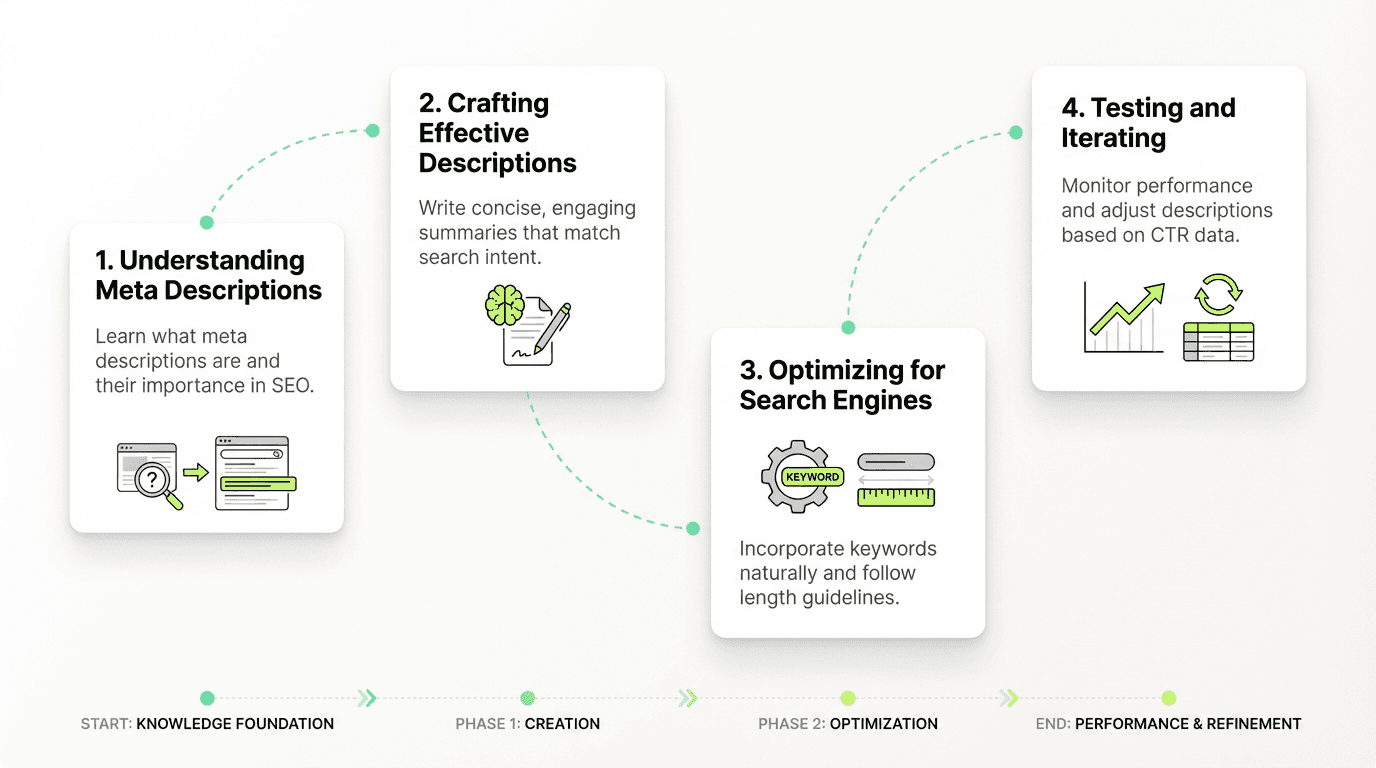
Creating meta descriptions that drive clicks requires balancing SEO best practices with persuasive copywriting. Here's your framework:
1. Lead With Value, Not Fluff
Get straight to the point. Avoid throat-clearing phrases like "In this article, we'll discuss..." or "Welcome to our guide on..."
Instead of: "In this post, we'll talk about meta description best practices and how to optimize them."
Write: "Boost your organic CTR by 30% with these 8 meta description best practices backed by 10,000 SERP analyses."
2. Include Your Primary Keyword Early
Place your target keyword in the first 50 characters when possible. This ensures it appears even if the snippet gets truncated, and Google will bold it when it matches the search query in the SERP.
3. Address User Intent Explicitly
Different queries have different intents. Tailor your description accordingly:
Informational queries ("what is meta description"): Define the term concisely and promise comprehensive explanation
Transactional queries ("buy project management software"): Highlight pricing, trial, or unique selling points
Navigational queries ("login page"): Confirm they're in the right place and mention key features
Comparison queries ("Asana vs Monday"): Promise unbiased analysis and specific decision criteria
4. Create Curiosity With Specificity
Numbers, statistics, and concrete details make your description more credible and clickable:
"5 templates" beats "several templates"
"Reduce load time by 40%" beats "improve performance"
"Used by 10,000+ agencies" beats "trusted by many"
5. Include a Call-to-Action
End with a gentle nudge toward clicking:
"Get the free template →"
"See how it works."
"Compare pricing and features."
"Start your free trial today."
6. Test Emotional Triggers
Depending on your audience and topic, certain emotional angles drive more clicks:
Urgency: "Limited-time offer" or "Updated for 2026"
Social proof: "Trusted by 50,000+ teams"
Fear of missing out: "Don't let competitors outrank you"
Curiosity: "The snippet optimization trick 90% of SEOs miss"
Benefit-focused: "Save 10 hours per week on content optimization"
Snippet Optimization for CTR: Advanced Techniques
Beyond basic meta description best practices, here are advanced CTR optimization strategies that give you an edge:
Use Schema Markup to Enhance Snippets
While not technically part of your meta description tag, structured data markup can add rich elements to your search result:
Star ratings for product and review pages
Recipe cards with cooking time and calories
FAQ snippets that expand your SERP real estate
Event information with dates and locations
Pricing for products and services
These rich snippets dramatically increase click-through rates—often by 20-30%—by making your result more visually prominent and informative.
Optimize for Featured Snippets
Featured snippets appear above organic results in position zero. While Google pulls this content from your page (not your meta description tag), you can optimize both simultaneously:
Structure content with clear, concise answers to common questions in 40-60 words. Then craft your meta description to tease that answer, encouraging clicks for more detail.
A/B Test Your Descriptions
If you have the technical capability, test different meta description variations to see which drives higher CTR:
Benefit-focused vs. feature-focused
Question format vs. statement format
With vs. without numbers/statistics
Different calls-to-action
Track CTR in Google Search Console and iterate based on performance data.
Monitor and Refresh Underperforming Pages
Use Google Search Console to identify pages with high impressions but low CTR (below 2-3%). These are prime candidates for meta description rewrites. Often a small tweak—adding a number, sharpening the value proposition, or better matching search intent—can double or triple your traffic from the same ranking position.
AI Search Optimization: Meta Descriptions in the Age of LLMs
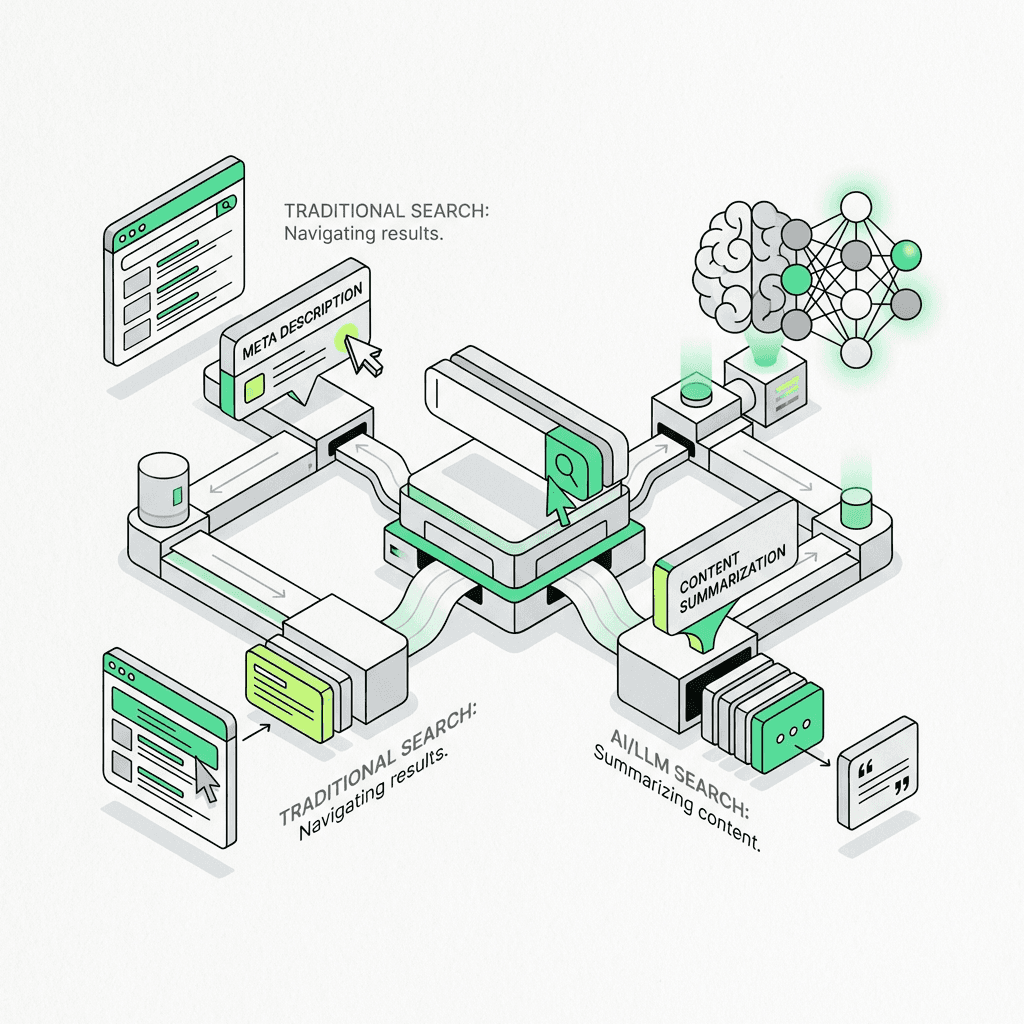
The rise of AI-powered search experiences—ChatGPT, Google's AI Overviews, Perplexity, and other generative engines—is fundamentally changing how meta descriptions function.
How AI Search Engines Use Meta Descriptions
Large language models and AI search tools don't just rank pages—they synthesize information and generate answers. Your meta description plays a crucial role in this process:
Citation Selection: When an LLM generates an answer, it often includes citations to sources. A well-written meta description that concisely answers the query increases the likelihood your page gets cited, as the AI can quickly validate your content's relevance.
Summary Generation: AI search tools use meta descriptions alongside page content when creating summaries. A clear, accurate description helps the AI understand your page's focus and extract the most relevant information.
Answer Extraction: For direct answer queries, AI systems look for concise, authoritative statements. A meta description written in a definitive, answer-focused format (think "Meta descriptions are HTML tags that summarize page content in 155 characters or less") is more likely to be surfaced.
Optimizing Meta Descriptions for AI Citation
To optimize meta descriptions for AI-powered search and increase your chances of citation:
Write in Answer Format: Structure descriptions as concise answers to implied questions. Instead of "Learn about meta descriptions," write "Meta descriptions are 155-character HTML summaries that appear in search results and influence click-through rates."
Include Key Entities: Mention relevant entities (people, products, concepts) that AI systems use to understand topic relationships.
Be Definitionally Clear: AI systems favor clear, unambiguous statements. Avoid marketing fluff and focus on information density.
Front-Load Credibility Signals: If you have authority markers (published research, years of experience, client numbers), mention them early.
The AI Elevator Pitch: Meta Descriptions for Answer Engines
Think of your meta description as your AI elevator pitch—the 155-character case for why an AI should cite your content over competitors'.
When ChatGPT, Perplexity, or Google's AI Overviews need to answer a query, they scan hundreds of potential sources in milliseconds. Your meta description is often the first thing they evaluate for relevance. A description that directly answers the query, uses clear language, and demonstrates expertise dramatically increases your citation probability.
This matters more than most realize. As AI-powered search grows, being cited in AI-generated answers becomes as valuable as ranking in position 1-3 in traditional search—perhaps more valuable, since the AI answer often satisfies the query without requiring a click.
Scaling Meta Description Creation: The Automation Challenge
If you're managing dozens or hundreds of pages, writing unique, high-quality meta descriptions for each becomes a significant resource drain. This is where most teams fall into two traps:
Trap 1: Template Descriptions: Using the same formulaic description across pages ("Learn about topic on our website") which Google rewrites and users ignore.
Trap 2: No Descriptions: Leaving meta descriptions blank and letting Google generate them from page content, losing control over messaging and CTR optimization.
Both approaches leave significant traffic on the table.
The Traditional Solution: Description Templates
The conventional approach is creating per-template description rules:
Blog posts: "Title - Learn key benefit with specific element like number/stat. CTA."
Product pages: "Product name - Key feature. Social proof. Pricing/trial info."
Category pages: "Browse number product type. Key differentiator. Shipping/guarantee."
This works better than nothing, but still produces repetitive, generic descriptions that don't account for the specific intent and content of each page.
The AI-Powered Approach: Intelligent Description Generation
Modern AI marketing tools can generate unique, intent-aligned meta descriptions at scale by:
Analyzing page content to understand the core topic, key points, and unique value
Identifying search intent for target keywords to ensure descriptions match what users want
Generating draft descriptions using LLMs trained on high-CTR examples
Validating against best practices (length, keyword inclusion, uniqueness)
Producing template-scale output without copy-paste repetition
This transforms snippet optimization from a tedious manual task into a strategic workflow.
How AI Automation Handles Meta Description Creation
An AI-powered workflow built for SEO can handle the entire meta description process:
Content Analysis Phase: The system scrapes your existing pages, extracting titles, headings, and key content to understand what each page covers.
Intent Mapping Phase: It analyzes your target keywords and their search intent, identifying what type of description (informational, transactional, navigational) fits each page.
Generation Phase: Using an LLM, the system drafts unique descriptions for each page, incorporating target keywords naturally while matching intent and adhering to length limits.
Validation Phase: The system checks each description against your brand voice guidelines, ensures uniqueness across pages, and flags any that might trigger Google rewrites (duplicate, too short, keyword-stuffed).
Implementation Phase: The system can output descriptions in whatever format you need—CSV for bulk upload, JSON for API integration, or direct CMS updates if you've built that integration.
This approach combines the scale of templated descriptions with the quality and uniqueness of hand-crafted ones.
Building Custom SEO Workflows Without Code
For growth teams looking to automate meta description creation and other SEO workflows, traditional solutions force an uncomfortable choice: hire developers to build custom automation, or settle for rigid, one-size-fits-all tools that don't match your specific needs.
Modern natural language workflow builders offer a third path: designing and deploying custom AI marketing workflows without writing code.
Instead of wrestling with API connectors and scattered prompts across multiple tools, unified platforms provide a workspace where you can:
Design your workflow in plain English (e.g., "Analyze these 500 product pages, identify target keywords, generate unique meta descriptions under 155 characters that include the primary keyword and a CTA")
Connect your data sources (CMS, Google Search Console, keyword research tools) without technical integration work
Deploy automation that executes your workflow at scale, handling hundreds or thousands of pages in minutes
Iterate and refine based on results, adjusting instructions as you learn what drives the best CTR
For meta description automation specifically, a custom workflow can:
Pull page URLs and existing content from your CMS
Fetch target keyword data from your SEO tool
Generate unique, optimized descriptions for each page
Validate them against your brand guidelines and SEO best practices
Output results in your preferred format or push directly to your CMS
The key difference from traditional automation tools: you're not limited to pre-built workflows. If you discover that meta descriptions with questions get 15% higher CTR for your audience, you simply adjust your instructions in natural language. No developer tickets, no waiting for feature requests.
This is what modern AI-powered SEO looks like: codifying insights into durable, scalable workflows without sacrificing flexibility or creative control.
Practical Implementation: Code and Technical Details
Let's get tactical. Here's how to implement meta descriptions correctly across different platforms and scenarios.
Basic HTML Implementation
The standard meta description tag goes in the `` section of your HTML:
WordPress Implementation
WordPress handles meta descriptions through SEO plugins. The two most popular:
Yoast SEO:
Rank Math:
React/Next.js Implementation
For modern JavaScript frameworks:
Dynamic Description Generation
For template-based pages (product listings, blog categories), generate descriptions dynamically:
Bulk Meta Description Updates
For large-scale updates, use your CMS's bulk edit capabilities or API:
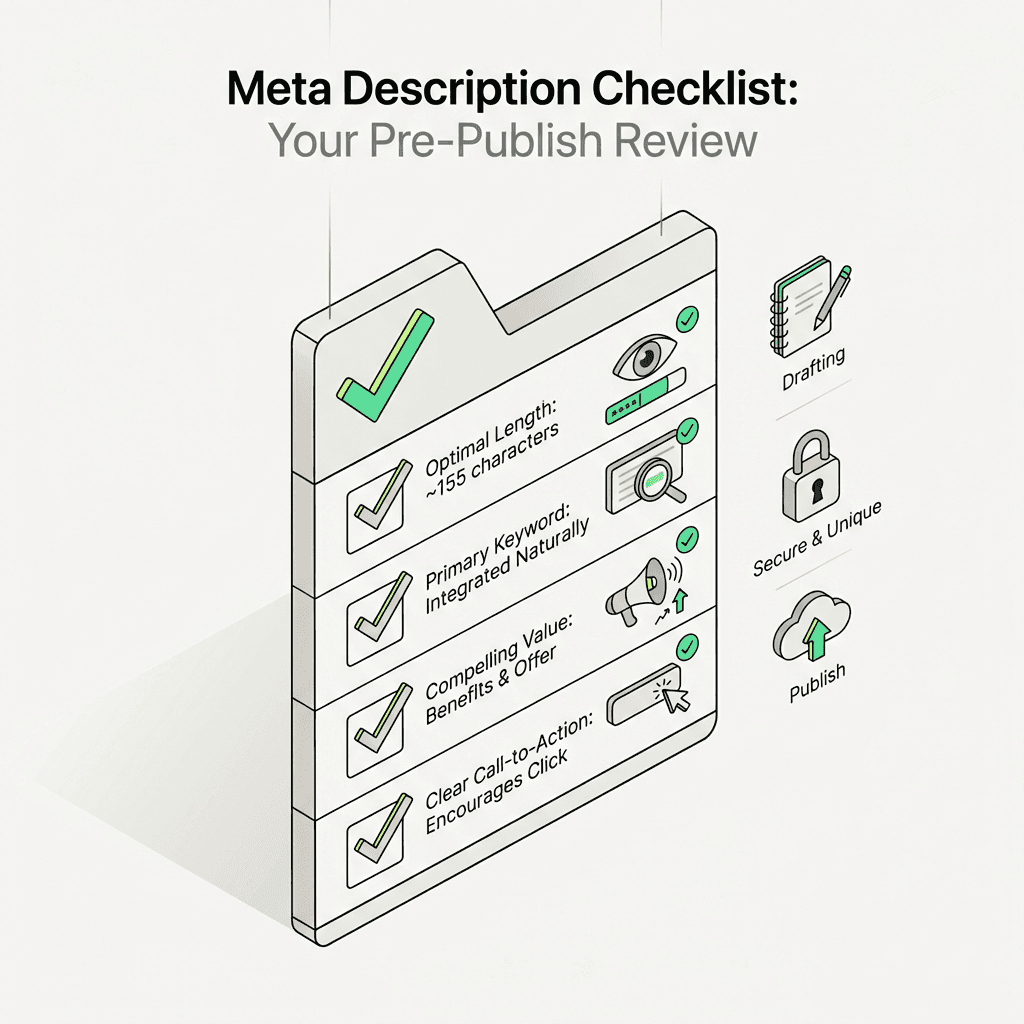
Meta Description Checklist: Your Pre-Publish Review
Before publishing any page, run through this meta description checklist:
Length & Format
120-155 characters (check actual length, not just word count)
Complete sentence that doesn't cut off awkwardly
Proper grammar and punctuation
SEO Optimization
Primary keyword included naturally in first 100 characters
1-2 secondary keywords if they fit naturally
Matches search intent for target query
Unique across your entire site (no duplicates)
Persuasion & CTR
Leads with clear value propositio
Includes specific number, stat, or concrete detail
Contains a subtle call-to-action
Accurately reflects page content (no clickbait)
Technical Implementation
Properly formatted HTML meta tag in ``
No special characters that might break rendering
Renders correctly in SERP preview tools
AI Optimization
Written in clear, answer-focused format
Includes relevant entities and concepts
Could serve as a standalone summary of page value
Common Meta Description Mistakes to Avoid
Even experienced SEO practitioners make these meta description errors:
Duplicate Descriptions: Using the same description across multiple pages. This confuses search engines and users, and Google will rewrite them.
Keyword Stuffing: Cramming keywords unnaturally ("meta description, meta descriptions, description meta, SEO meta description"). This hurts readability and triggers rewrites.
Too Vague: Generic descriptions like "Learn more about our services" tell users nothing and get ignored.
Misleading Content: Promising something in the description that isn't on the page. This drives high bounce rates and damages rankings.
Ignoring Mobile: Writing 200+ character descriptions that get cut off on mobile devices where most searches happen.
No Description at All: Leaving it blank and hoping Google generates a good one. You're giving up control of your first impression.
Copying Page Content: Using the exact first sentence from your page. This wastes the opportunity to craft a persuasive pitch and often results in redundancy.
Missing Title Tag Coordination: Not coordinating your meta description with your title tag creates a disjointed SERP appearance. Your title tag and meta description should work together to tell a cohesive story.
The Future of Meta Descriptions: What's Next?
As search evolves, so does the role of meta descriptions:
AI-Generated Personalization: Search engines may soon generate personalized snippets based on individual user behavior, search history, and context—making your meta description one input among many.
Voice Search Adaptation: As voice queries grow, meta descriptions that answer questions directly ("What is a meta description? It's a 155-character HTML summary...") will become more valuable.
Visual Search Integration: With visual search expanding, meta descriptions may need to describe not just text content but images and videos on the page.
Real-Time Dynamic Optimization: AI tools will increasingly test and optimize meta descriptions in real-time based on CTR performance, automatically adjusting descriptions for maximum clicks.
The core principle remains: write for humans first, optimize for machines second. A meta description that genuinely helps someone decide if your page answers their question will always outperform one written only for algorithms.